
This storytelling framework will get you more budget
A Pixar-inspired playbook for persuading the people who control the purse strings.


Marketers are freaking out. That’s because their SEO data is starting to look like this:
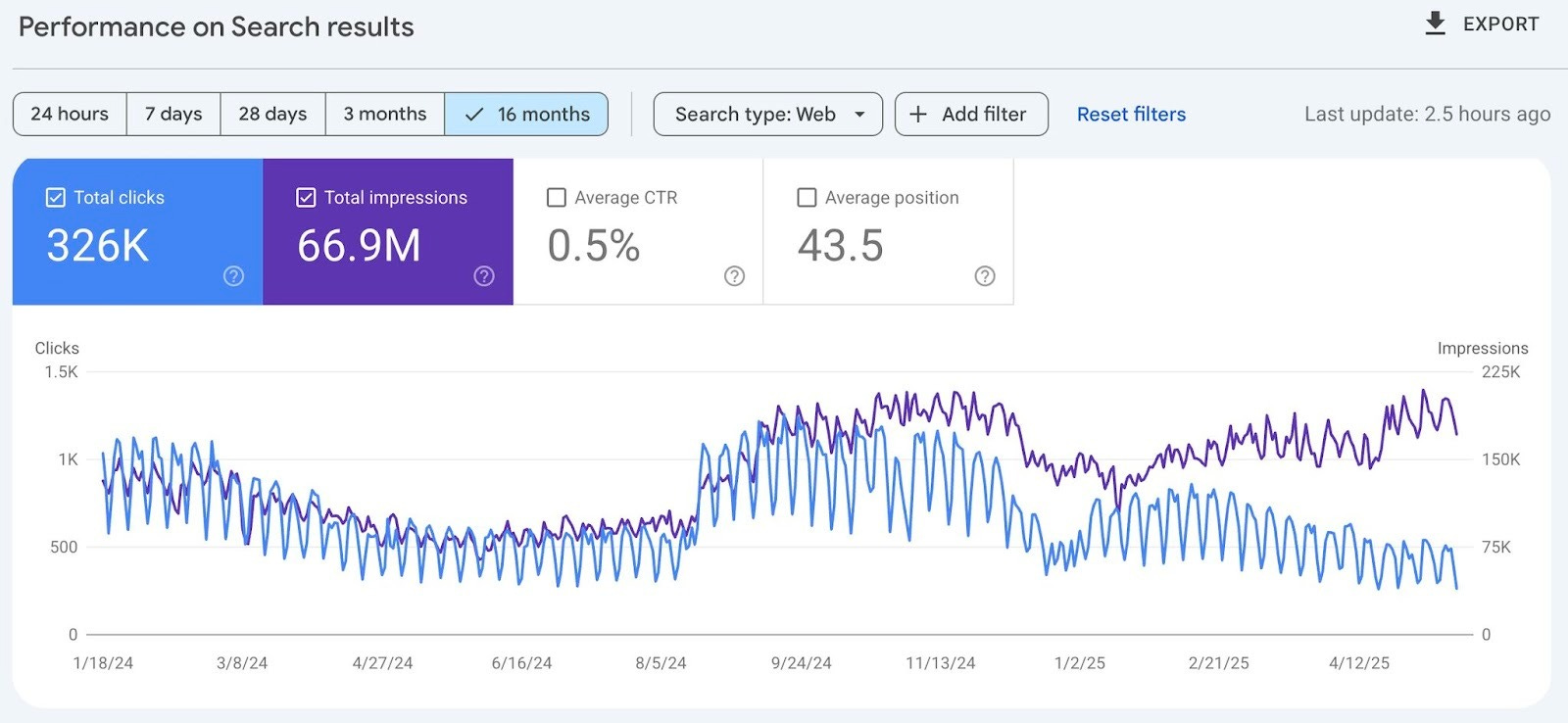
Organic traffic has long been the top metric companies use to measure SEO success. But thanks to Google’s AI Overviews, clicks are down for everyone. Now, you’ve got to explain why to your exec team. And while they may have a cursory understanding of AI Search, their eyes will glaze over the second you start talking about “vector embeddings” and “entities.”
I’ve spent the past 15 years of my career convincing CEOs and CFOs to invest in content instead of lighting it on fire with retargeting ads and cold calling. And I have good news and bad news for you.
The bad news: Just saying, “Everyone’s traffic is down,” won’t work as an argument. Your budget will just get slashed. A technical presentation on AI Search won’t work either.
The good news: There’s a simple formula you can use to tell a compelling story about how AI is changing the SEO and content marketing game — and what you should do next.
It comes from the most unexpected of places: Pixar.
The Story Spine
In 1997, Rebecca Stockley had possibly the best job in the world: “Improvisation Consultant” at Pixar. One day, she took an improv class with teacher Kenn Adams, who introduced his students to a structure he’d created to simplify the storytelling process. He called it the Story Spine.
She taught it to other Pixar writers, and before long, it became the backbone of the company’s storytelling success (Toy Story 2, Finding Nemo, Cars, all the classics).
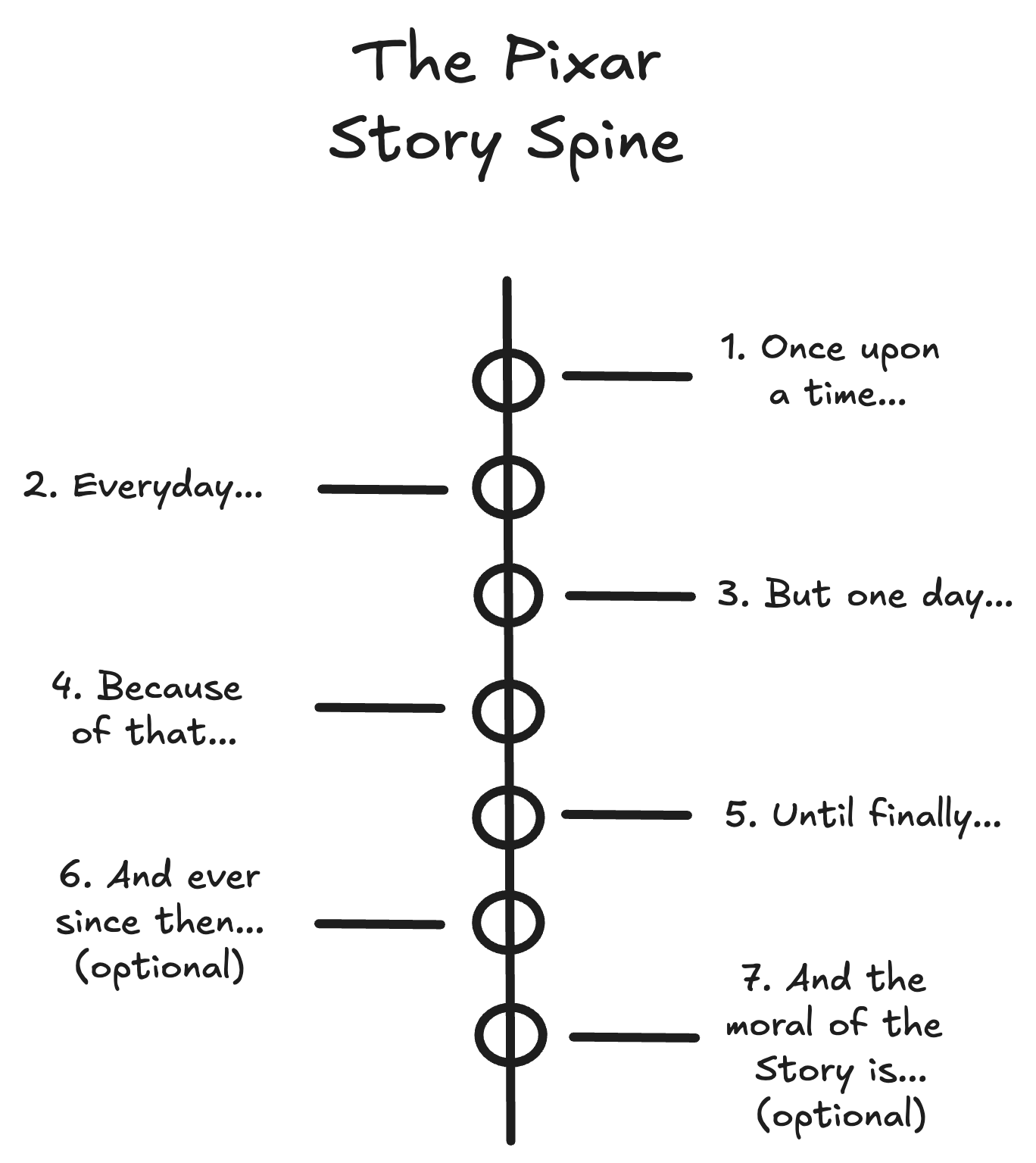
The Story Spine follows a simple structure:
Beginning
1. Once upon a time… (the setting or shared world)
2. Every day… (the routine)
Event
3. But one day… (break to the routine or status quo)
Consequences
4. Because of that… (consequences)
Climax
5. Until finally… (climax/big reveal)
End
6. And ever since then… (transformation)
7. And the moral of the story is… (lesson/new reality)
This formula is incredibly helpful for business storytelling, particularly when you’re communicating a strategic plan and asking for budget. Most of the time, budget presentations come across as someone saying, “This is what I want to do.” With the Story Spine, you take your audience (the exec team) on a shared journey.
Let’s break it down in the context of explaining what’s going on with SEO/GEO, and justifying more budget for next year:
Beginning
1. Once upon a time… (shared world)
2. Every day… (the routine or context)
Start by establishing the journey you’ve been on together. Example: As a company, you made the decision several years ago to invest seriously in content and SEO, and it paid off. You established yourself as category leaders. Even though Google’s algorithm changed regularly, you kept on top of your game and adapted, driving consistent traffic and revenue growth.
Event
3. But one day… (the break to the routine or status quo)
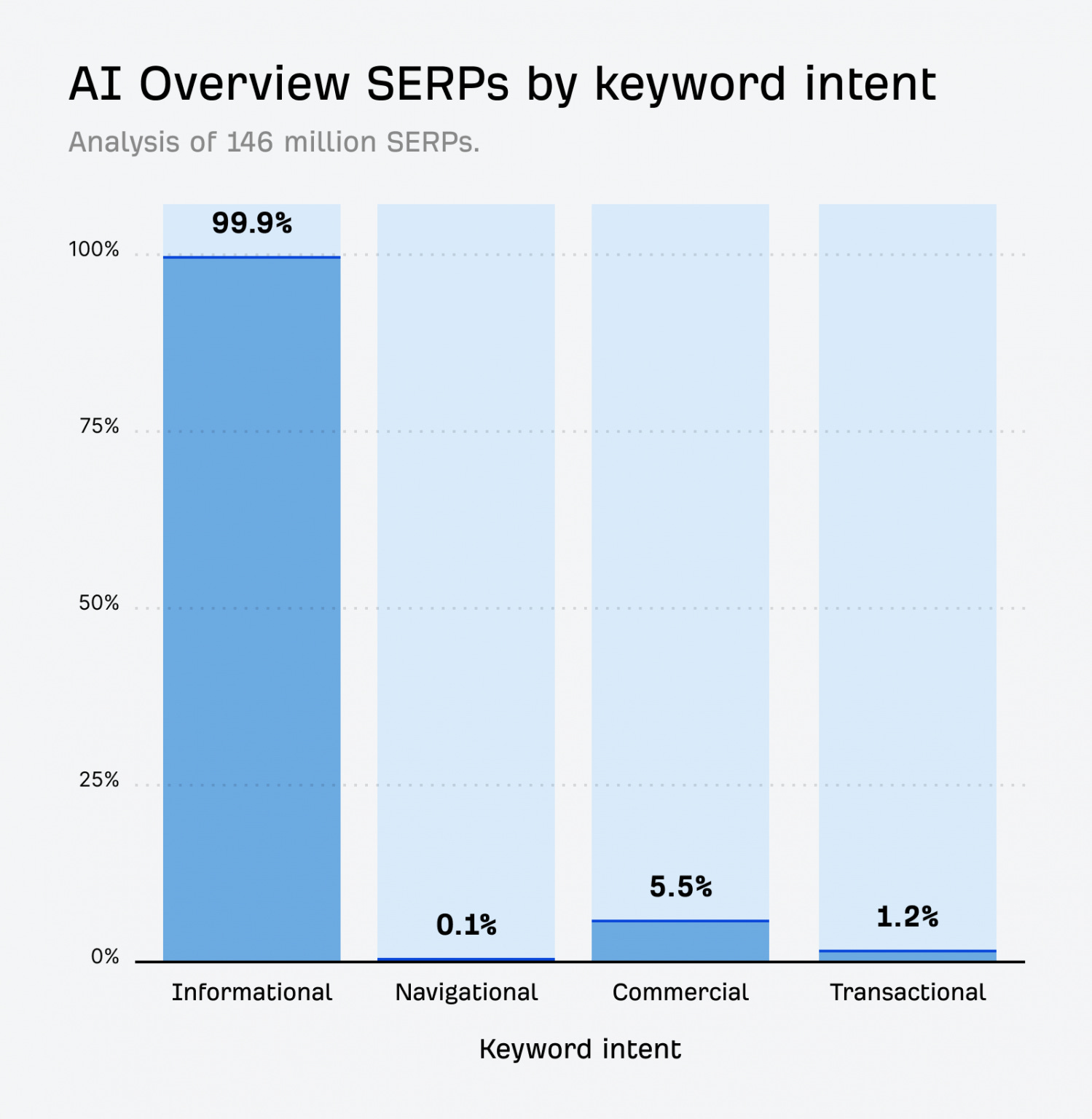
But then, AI Overviews arrived. It fundamentally changed SEO. Suddenly, people didn’t need to click on any links. For 99% of informational queries like “What’s a content marketing platform?” Google just gave people the answer. Traffic dropped across the board. Until 2025, traffic and impressions were directly correlated. Now, they’ve diverged.
Consequences
4. Because of that… (consequences)
Now, explain the change that needs to happen as a result of that change:
Shifting focus onto the new metrics that matter (tying SEO success to visibility and revenue instead of just clicks).
Adjusting your strategy to increase AI Search visibility and citations.
Investing in new technology and partners that are better suited to meet those needs.
Climax
5. Until finally… (climax/big reveal)
Once you lay out the consequences, present the big reveal: the new reality you’ll create together.
This is where you present your detailed plan of action and the ROI it will generate.
End
6. And ever since then… (transformation)
7. And the moral is…
Finally, show what the new reality could look like after this investment. What’s the upside? By being early movers on AI Search, how will you establish a key advantage over the competition? Paint a vivid picture.
I’ve used this formula countless times when fighting for budget, and it works shockingly well. Many CEOs and CFOs say they only care about facts and figures, but the truth is that we humans are all the same: We’re most swayed by a great story.
P.S. If you want some killer data that’ll help you craft your action plan and show the upside, request a custom GEO audit here from our team. No strings attached, just a little gift from us this holiday season.
Joe Lazer is the best-selling author of The Storytelling Edge and the fractional CMO at Pepper.
.



Where AI investment is actually paying off
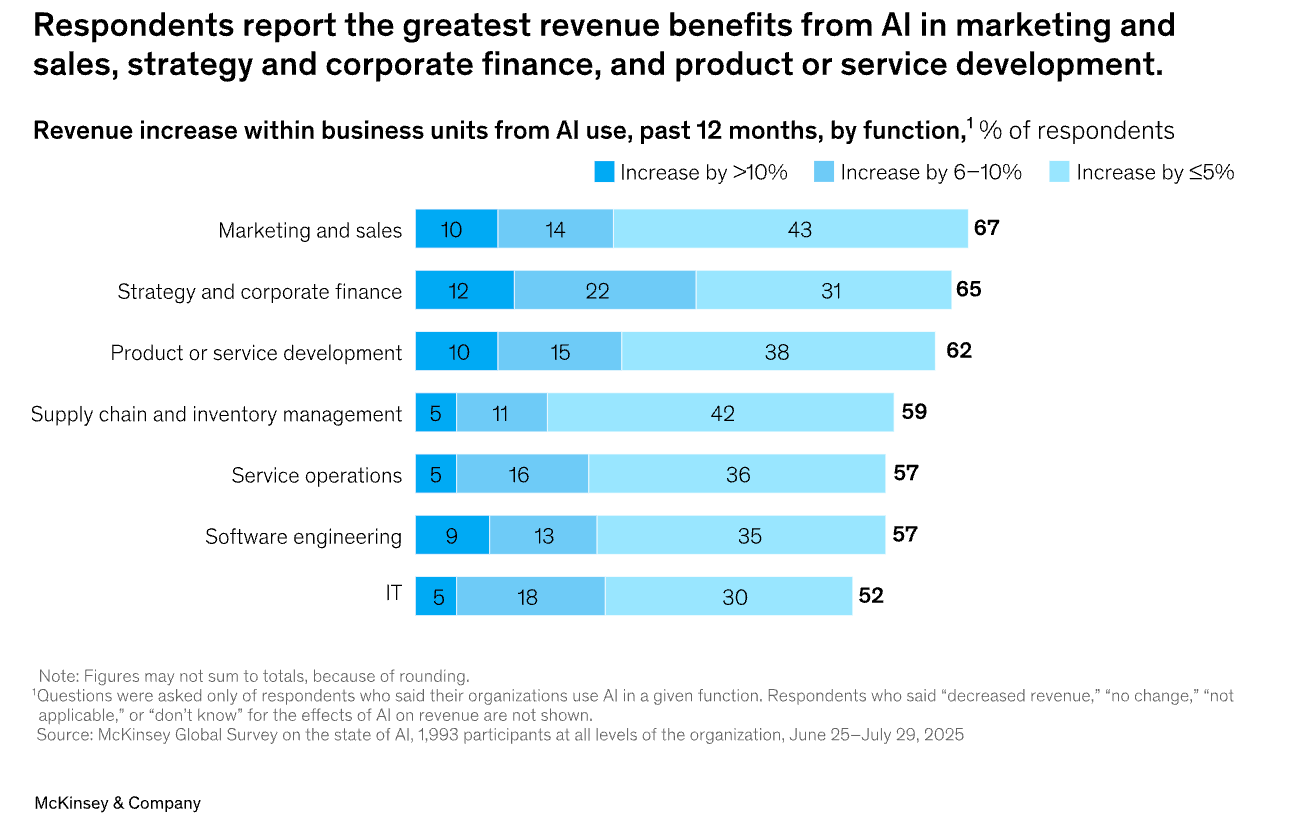
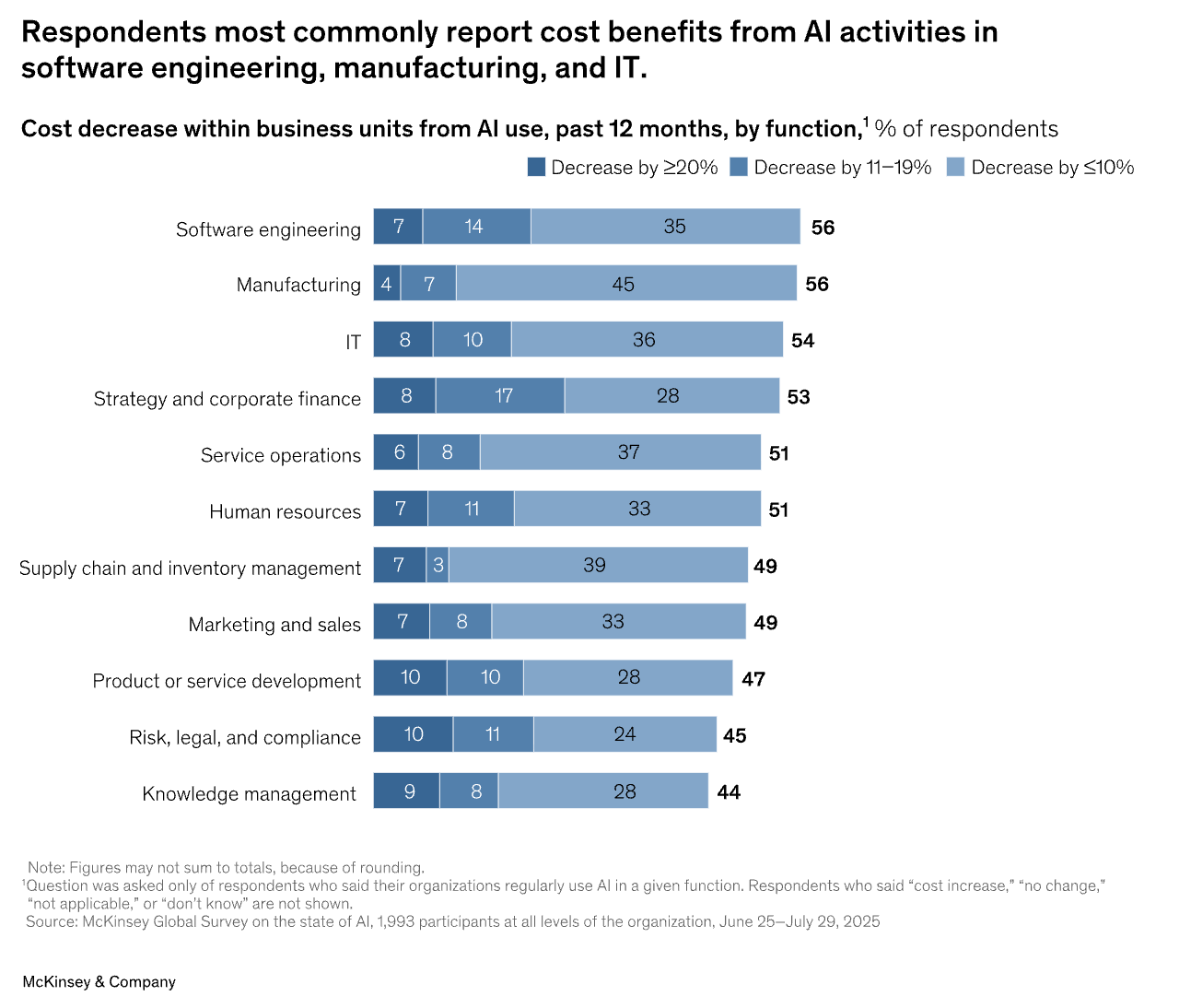
As you’re fighting for budget, McKinsey just handed you the receipts. Their latest State of AI report shows that marketing, sales, strategy, and product development saw the biggest revenue lifts from AI this year, with up to 67% of teams reporting gains. Meanwhile, software engineering, manufacturing, and IT are seeing the deepest cost savings (at least 54% of respondents in these categories saw reductions).

AI news is as jam-packed as your annual planning deck that “definitely won’t hit 120 slides” again. Here are the top stories to know this week.
Google faces an EU antitrust investigation. Brussels just opened a probe into how Google uses online material to train its models, with regulators questioning whether the company had the right to scrape and repurpose publishers’ content. (We can take a wild guess at the answer.)
Meta is cutting new AI licensing checks to major publishers. It’s potentially good news for bigger outlets, but it’s leaving some scrappier media shops staring at their empty inboxes going, “Cool cool cool.”
Alexa can now order your household staples the moment they get cheaper. Dynamic pricing, meet dynamic purchasing.
Google’s new Doppl app lets you generate images of yourself in different outfits, channeling some real “Black Mirror meets Stitch Fix” vibes.
Google insists Gemini will stay ad-free in 2026. The internet remains unconvinced.
Google’s Year in Search retrospective mixes cultural moments with AI breakthroughs. Of note: “Tell me about…” and “How do I…” queries dominated search habits.
Redditors say AI-generated junk is flooding threads, leaving mods in a constant state of whack-a-mole (and losing).
Google will revive its smart glasses in 2026, hoping society is finally ready for face-mounted cameras, 11 years after the company’s last attempt flopped.

Head of Marketing @ Abacum (NYC, $280,000 - $340,000 USD)
Senior Director, Brand Marketing @ Affirm (Washington, DC, $285,000 - $323,000)
VP, Digital Experience @ CrowdStrike (US Remote, $290,000 - $370,000)